 English
 Português
Symposium at UNESCO in Paris Charts the Future of Open Science and Transparent AI
Feb, 28 2026
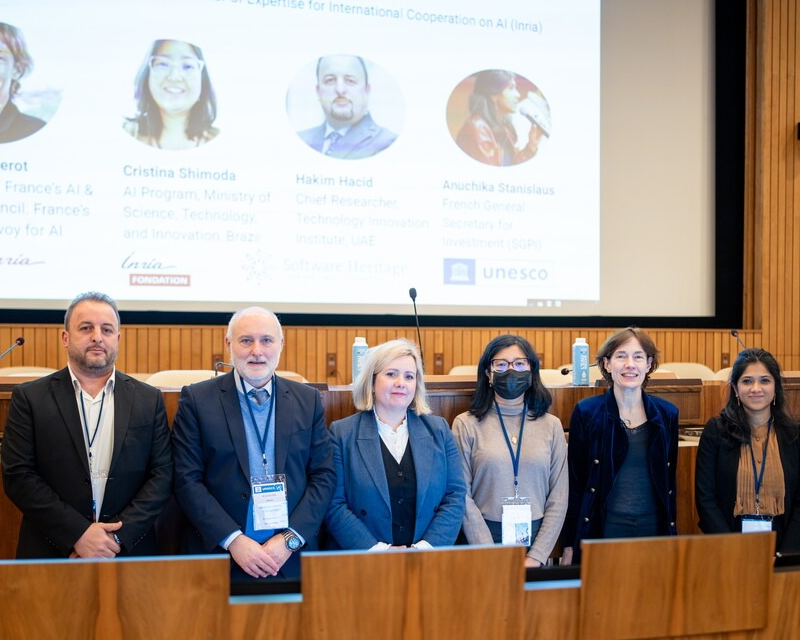
PARIS – In a historic milestone for the preservation of digital knowledge, UNESCO headquarters in France hosted the Software Heritage Symposium and Summit on January 28, 2026. The event, celebrating the 10th anniversary of the Software Heritage initiative, brought together global leaders to consolidate source code as a Digital Public Good—essential for a sustainable future and for the technological sovereignty of nations.
This year’s edition was not only a celebration of a decade of software archiving, but also the launch of a strategic agenda for 2026–2030. The central focus is clear: to ensure that the “DNA” of our digital civilization is preserved, cited, and reused in an inclusive, ethical, and transparent manner. The library is currently the largest collection of source code in the world, having doubled in size over the past five years and reaching 27 billion source files.
Transparent AI and Inclusion: The New Paradigm
The panel “Transparent AI for Inclusion” highlighted that, in a world dominated by “black-box” algorithms, responsible Artificial Intelligence must be anchored in open and verifiable code archives. The Software Heritage library was presented as a reliable “anchor point” for AI model training, protecting against data access restrictions and technological dependencies.
In this context, the international standards discussed at the event aim to:
- Strengthen linguistic and cultural diversity in AI development.
- Ensure data integrity and provenance through persistent and intrinsic identifiers (SWHID), now standardized under ISO/IEC 18670.
- Promote local innovation by enabling researchers to build upon globally accumulated knowledge, which is essential for cybersecurity and supply chain analysis.
Brazil at the Forefront of Digital Transformation
One of the highlights of the symposium was the Brazilian presence, reflecting the country’s commitment to open digital infrastructure. The Artificial Intelligence Institute of the National Laboratory for Scientific Computing (LNCC) was represented by researcher José Hugo Elsas, while the Secretariat for Science for Digital Transformation of the Ministry of Science, Technology and Innovation (SETAD/MCTI) was represented by the General Coordinator for Digital Transformation, Cristina Shimoda.
The delegation underscored the strategic importance Brazil places on source code preservation. For LNCC and CGTR/SETAD/MCTI, access to global code archives is a resource that benefits multiple stakeholders and fields of knowledge, promotes scientific reproducibility, and advances AI development. Preserving source code is not merely a technical effort—it is an act of cultural safeguarding and a driver of digital autonomy, emphasized the General Coordinator for Digital Transformation, Cristina Shimoda.
According to researcher José Hugo, regarding the Software Heritage initiative, Brazil stands out as one of the preferred partners for its expansion due to a combination of technical and scientific capacity, legal compatibility, and a diplomatic stance grounded in dialogue, neutrality, and autonomy. As discussed by initiative members, this combination is rare—especially outside the European Union—which has so far limited the initiative largely to the European continent. This partnership presents a unique opportunity to contribute to the Brazilian Artificial Intelligence Plan (PBIA), particularly Axes 1, 3, and 4. The initiative also materializes a practical tool for the country’s digital sovereignty: the ability to secure access to critical software for government and industry, even in the event of external conflicts or hostilities.
An Agreement for Future Generations
The opening ceremony was marked by the renewal of the partnership between UNESCO and INRIA, the French National Institute for Research in Digital Science and Technology. The new agreement reaffirms the commitment to maintaining the archive as a global resilience infrastructure, comparable to commons such as Wikipedia and OpenStreetMap.
The 2026–2030 agenda marks the transition of the library from a “heritage archive” to an operational foundation for digital sovereignty. The goal is that, by 2030, software preservation and citation will be integrated practices across public administration, industry, and academia.
To learn more, visit:
- Software Heritage Symposium and Summit – UNESCO
- Consolidating the World Software Library – Inria
- https://www.softwareheritage.org/2026/01/29/takeaways-software-heritage-symposium-and-summit-2026/
Photos: ©Inria / Photo B. Fourrier
Other News
International Cooperation: IIA-LNCC Presents the Gypscie System at a Seminar at the LIG Laboratory of Université Grenoble Alpes
Rio de Janeiro Hosted the GPAI Innovation Workshop 2026 and Strengthened Brazil’s Leadership in Global Artificial Intelligence Discussions