 English
 Português
ICLR 2026: Researchers Associated with IIA-LNCC Present Advances in AI and Scientific Computing
Jun, 02 2026
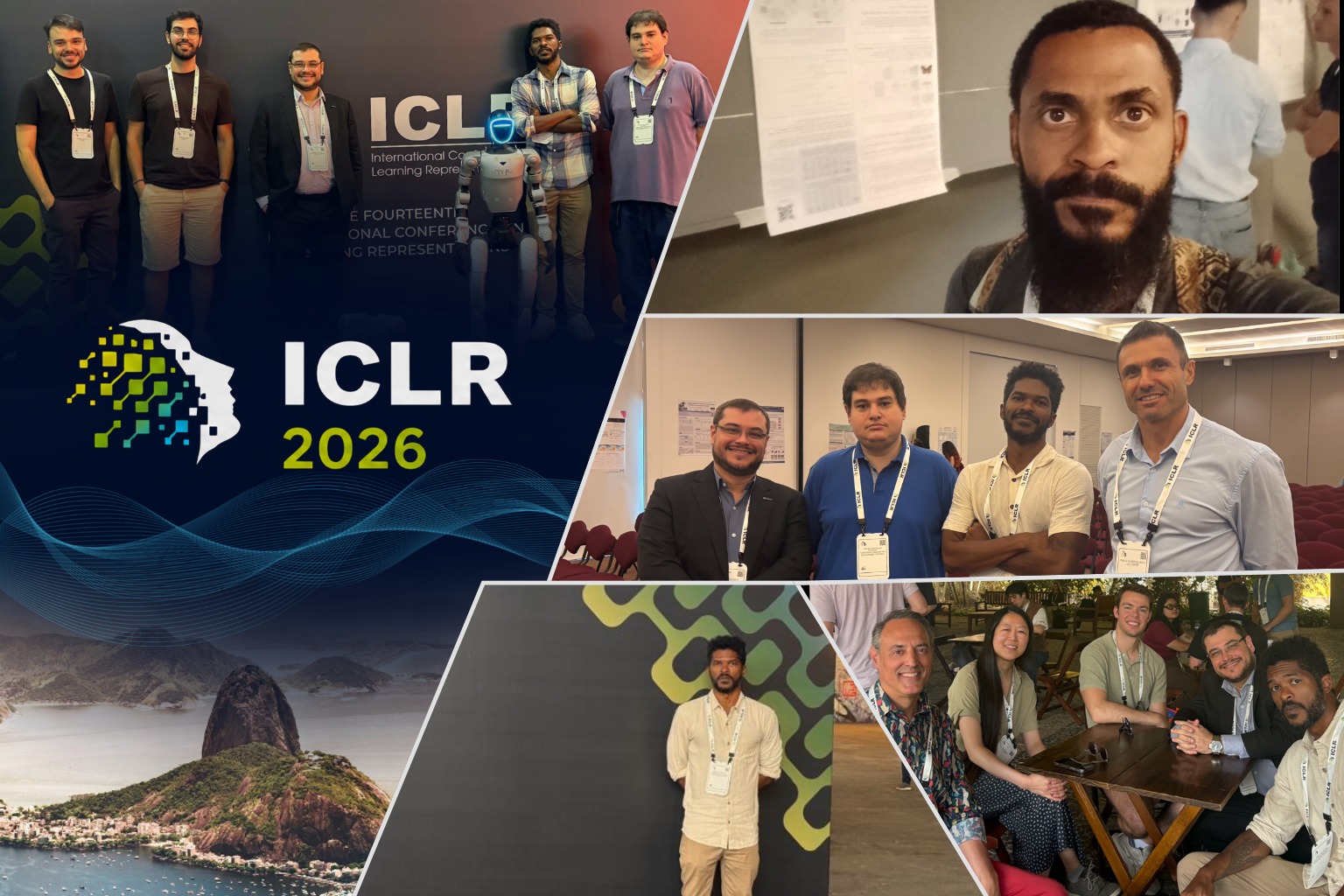
The Artificial Intelligence Institute of LNCC (IIA-LNCC) participated in the International Conference on Learning Representations (ICLR) 2026, one of the leading international conferences in Artificial Intelligence and Machine Learning. The 14th edition of the conference was held in Rio de Janeiro, Brazil, from April 23 to 27, 2026, bringing together researchers, students, and professionals from around the world to discuss recent advances in foundation models, deep learning, scientific AI, and computational applications across multiple domains. The main conference took place from April 23 to 25, while workshops were held on April 26 and 27.
With institutional support and sponsorship from IIA-LNCC, researchers associated with the institute participated in conference workshops, presenting research on AI-driven scientific modeling, physics-informed neural operators, trustworthy scientific question-answering systems, and hybrid learning approaches for epidemiological modeling.
At the Foundation Models for Science (FM4Science) workshop, Bruno Leonardo Santos Menezes presented the paper Evidence-Gated Scientific QA with Explicit Abstention and Page-Level Provenance, related to the Pororoca system. The study proposes a large language model-based scientific question-answering approach in which the system explicitly decides when to answer and when to abstain, conditioning answer generation on the existence of verifiable evidence in the analyzed corpus. According to Bruno, “participating in the FM4Science workshop was an important opportunity to present Pororoca to an international audience of researchers working at the intersection of language models and science.” He also emphasized that the proposed approach treats abstention “not as a limitation of the system, but as a correct and auditable response when evidence is insufficient.” For him, presenting the work at ICLR was important both for positioning IIA-LNCC’s research within the discussion on the reliability of LLMs in high-risk scientific domains and for receiving feedback from the international community while identifying connections with related work.
Among the presented works was also Learning Dengue Dynamics Through Hybrid Equation-Guided and Data-Driven Models, by Américo Barbosa da Cunha Junior, presented at the AI&PDE: ICLR 2026 Workshop on AI and Partial Differential Equations. The study explores hybrid approaches that combine differential equation-based models and data-driven techniques to model dengue dynamics. Reflecting on the event, the researcher stated that “participating in ICLR 2026 was a highly rewarding experience, providing the opportunity to follow the latest advances in Artificial Intelligence while exchanging ideas with researchers and professionals from the field.” According to him, the conference brought together work of “high scientific and technological impact,” contributing significantly to new discussions and research perspectives in AI.
At the same workshop, Fabio Pereira dos Santos presented the paper Physics-Informed Shearlet Neural Operator (PI-ShearletNO) for Parametric Partial Differential Equations. The research proposes a physics-informed neural operator for solving parametric partial differential equations using shearlet-based representations. The researcher highlighted that “presenting PI-ShearletNO at the AI&PDE workshop enabled valuable exchanges with experts from different parts of the world,” offering new perspectives on neural operators and physics-informed learning. According to him, discussions with researchers working on multiscale methods, uncertainty quantification, and spectral architectures provided important insights for the proposed approach, particularly in problems involving anisotropic solutions. Fabio also emphasized that the workshop was essential for “positioning the work within the global effort to integrate geometric deep learning and scientific computing.”
The participation of these researchers at ICLR 2026 reinforces IIA-LNCC’s engagement with strategic topics in contemporary Artificial Intelligence and highlights the institute’s role in strengthening the international presence of Brazilian research in AI, scientific computing, and foundation models for science.
IIA Outreach Office
instituto.ia@lncc.brOther News
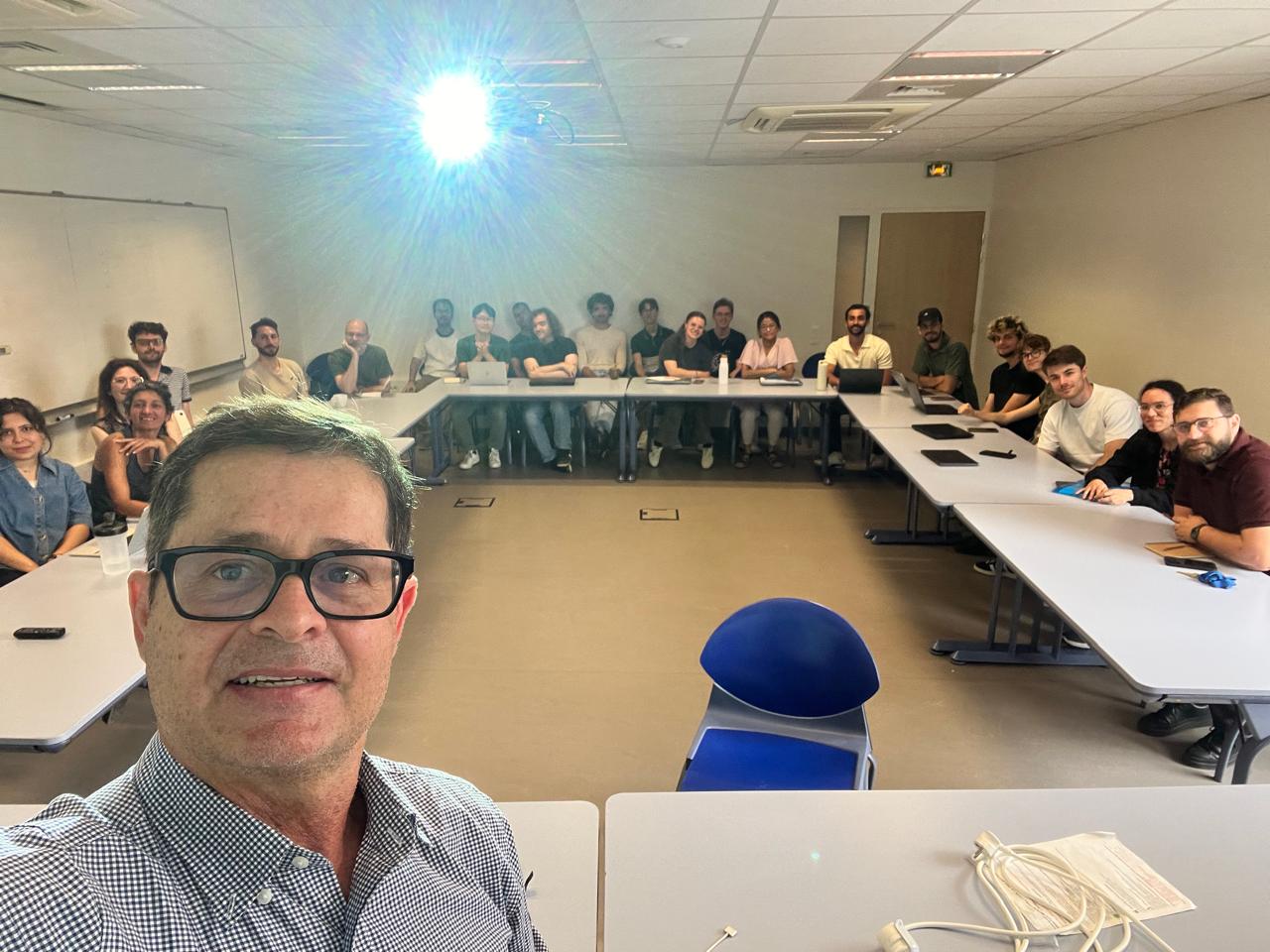
International Cooperation: IIA-LNCC Presents the Gypscie System at a Seminar at the LIG Laboratory of Université Grenoble Alpes
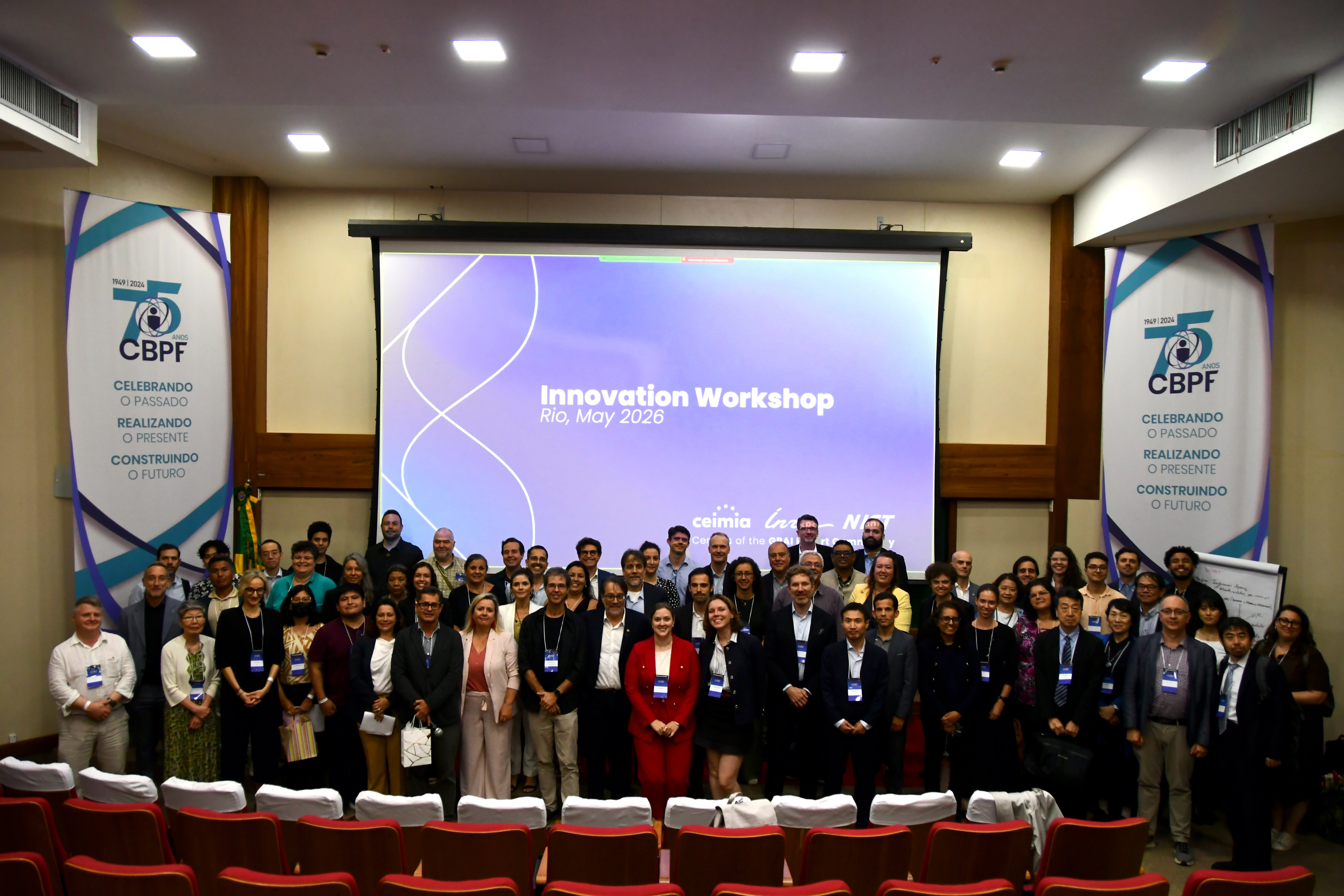
Rio de Janeiro Hosted the GPAI Innovation Workshop 2026 and Strengthened Brazil’s Leadership in Global Artificial Intelligence Discussions